

I used to believe physical activity only mattered when it was planned, intense, and measurable. If I did not log a workout or break a sweat, I assumed it had little impact on my health. That thinking shifted when I started researching where on the physical activity pyramid do lifestyle activities belong and realized how much daily movement I was overlooking. This article is built on that realization and how it changed the way I approach fitness and health.
Most people searching for this topic are not trying to optimize athletic performance. They want to know whether everyday movement actually counts and how it fits into a broader health framework. What follows is a first person explanation grounded in research, public health guidance, and practical experience.
💡 Key Takeaways
- Foundational Role: Lifestyle movement sits at the base of the physical activity pyramid and supports daily health.
- Frequency First: The pyramid emphasizes how often you move rather than how intense each activity is.
- Everyday Impact: Simple actions like walking and household chores contribute meaningfully to overall well-being.
- Sedentary Awareness: Reducing prolonged sitting is just as important as adding structured exercise.
Understanding the Physical Activity Pyramid
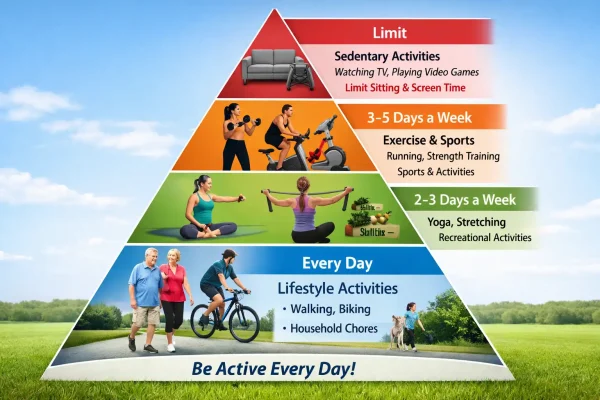
The physical activity pyramid is a visual model that organizes movement based on how often it should be performed. It is not a ranking of difficulty or athletic ability. When I first studied it carefully, I noticed it reflects real life patterns rather than gym routines.
Activities at the bottom are meant to happen daily. As you move upward, activities become more structured and less frequent. At the top sit behaviors that should be limited because they reduce overall health when done too often.
Fitness Pyramid Explained
The fitness pyramid explained movement in a way that finally made sense to me. Instead of asking how hard I should exercise, it asked how often I should move. That shift removed a lot of unnecessary pressure.
This model assumes that long-term health is built through consistency. Daily movement creates a base that supports all other forms of physical activity.
Physical Activity Levels Pyramid
The physical activity levels pyramid is divided into layers that represent frequency. Each level answers how often an activity should realistically occur in a healthy lifestyle. This structure helped me understand why occasional intense workouts were not enough on their own.
The base of the pyramid focuses on movement that should happen every day. The middle levels include aerobic and strength activities that require planning, and understanding the difference between yoga and Pilates can help you choose the right option for your goals. The top level highlights sedentary behaviors that should be reduced.
Where Lifestyle Activities Fit in the Pyramid
Lifestyle activities physical activity pyramid placement is clearly at the base. This foundational level is often referred to as Level 1. It represents movement that should be performed daily or as often as possible.
The pyramid is structured by frequency rather than intensity. That design emphasizes that small actions repeated every day can have a greater impact than infrequent workouts.
What Level of the Physical Activity Pyramid Includes Daily Activities
The level that includes daily activities is the bottom layer of the pyramid. This level focuses on movement that integrates naturally into everyday life. These actions help reduce long periods of sitting and inactivity.
I found that treating daily movement as essential rather than optional made my routine more balanced. It also made exercise feel like a complement instead of a correction.
Why Lifestyle Activities Form the Foundation
Lifestyle movement sits at the base because it is the most accessible form of physical activity. It does not require special equipment, training, or scheduling. This accessibility makes it sustainable over long periods of time.
When I began prioritizing daily movement, I noticed improvements in my energy and mobility without increasing workout intensity. The pyramid helped explain why those changes occurred.
Daily Movement and Health
Daily movement and health are closely connected through circulation, joint mobility, and metabolic function. Frequent low-intensity movement helps keep the body active throughout the day and lowers the risk of developing type 2 diabetes. These effects accumulate gradually but consistently.
This type of movement also helps counter sedentary behavior. That is why it is placed at the foundation of the pyramid rather than treated as optional.
Characteristics of Lifestyle Activities
Lifestyle activities are defined primarily by how often they occur. They are recommended for daily inclusion, typically five to seven days per week. This frequency is what makes them effective.
The intensity of these activities is usually low to moderate and sustainable throughout the day. Their main purpose is to increase daily energy expenditure and reduce prolonged sitting.
Lifestyle Physical Activities Examples

Lifestyle physical activities examples include walking during daily transit, taking the stairs instead of elevators, and performing household chores. Yard work and light recreational play also fall into this category. These movements increase activity without feeling like structured exercise.
Once I started recognizing these actions as meaningful, my mindset changed. Movement stopped feeling limited to workout sessions.
Daily Lifestyle Activities and Fitness
Daily lifestyle activities and fitness reinforce each other through repetition. Frequent movement improves endurance, posture, and joint stability over time. These benefits support more demanding activity when needed.
Fitness becomes easier to maintain when movement is spread across the day. This is why lifestyle activity anchors the pyramid.
Moderate Physical Activity Examples in Daily Life
Moderate physical activity examples often overlap with lifestyle movement. Brisk walking, active cleaning, and carrying groceries raise heart rate slightly without causing exhaustion. These actions can be sustained for longer periods.
I noticed that incorporating moderate movement into daily tasks improved my stamina. It also reduced the need for longer recovery after workouts.
Health-Related Physical Activity
Health-related physical activity focuses on movements that support functional health rather than performance goals. Lifestyle movement improves balance, coordination, and mobility. These qualities are essential for long-term independence.
This type of activity also lowers injury risk because it strengthens the body gradually. The pyramid reflects this protective approach to health.
Types of Physical Activity and How They Work Together
Types of physical activity include lifestyle movement, aerobic exercise, strength training, and flexibility work. Each type serves a different role in overall health. The pyramid helps visualize how often each should occur.
Lifestyle movement supports all other types by maintaining baseline activity. Without it, structured exercise becomes harder to sustain.
Health-Related Fitness Activities
Health-related fitness activities improve stamina, joint health, and functional capacity. These activities support everyday living rather than isolated performance metrics. Over time, they contribute to resilience and adaptability.
Recognizing this helped me value daily movement as part of fitness rather than something separate from it.
Physical Activity Guidelines and Daily Practice
Physical activity guidelines consistently emphasize the importance of daily movement. Most recommendations suggest at least thirty minutes of activity each day. Lifestyle movement makes this goal achievable without formal workouts.
Breaking movement into short sessions throughout the day felt more realistic for me. Consistency improved without added stress.
Sedentary Behavior and Its Placement

Sedentary behavior occupies the top level of the pyramid. This placement signals that it should be limited rather than eliminated entirely. Prolonged sitting associated with a sedentary lifestyle undermines the benefits of physical activity.
Reducing sedentary time often produces noticeable improvements in energy and comfort. This insight changed how I structured my workday.
How Lifestyle Activities Improve Fitness
Lifestyle movement improves fitness through consistency and cumulative effect. Frequent low-intensity activity supports cardiovascular health and muscular endurance. These adaptations develop steadily over time.
I found that when daily movement increased, structured workouts felt easier. Fitness became more sustainable rather than episodic.
Common Misunderstandings About Lifestyle Movement
Many people assume lifestyle movement is too light to matter. This belief overlooks frequency and accumulation. Small actions repeated daily create meaningful change.
Another misconception is that lifestyle movement replaces exercise. In reality, it supports exercise by keeping the body active between sessions.
The Full Physical Activity Pyramid Structure
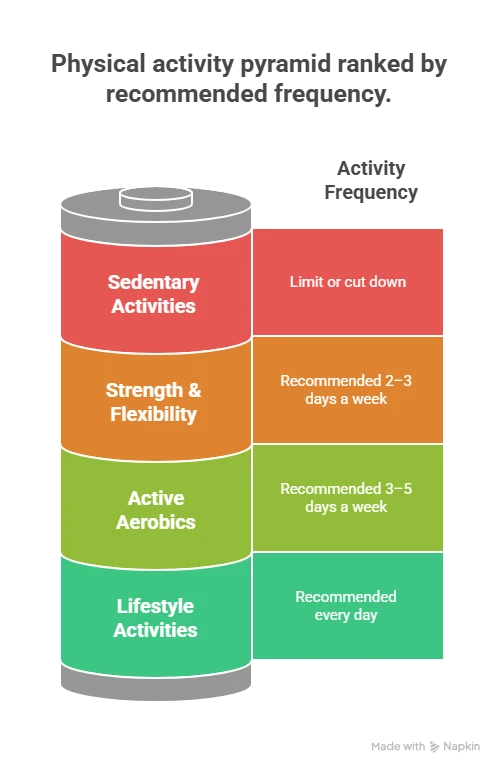
Understanding the full structure provides context for where lifestyle activities fit. The pyramid organizes activity by recommended frequency. This hierarchy clarifies priorities for daily movement.
| Level | Activity Type | Recommended Frequency |
| Top (Level 4) | Sedentary Activities (TV, gaming, sitting) | Limit/Cut Down |
| Level 3 | Strength & Flexibility (Weights, Yoga) | 2–3 days a week |
| Level 2 | Active Aerobics & Sports (Jogging, Soccer) | 3–5 days a week |
| Base (Level 1) | Lifestyle Activities (Walking, Gardening) | Every day |
Applying the Pyramid in Daily Life
Making Daily Movement Automatic at Work and Home
I started applying this model at work, not just during workouts or walks. I set timers to stand, stretch, and move briefly between tasks. These small breaks noticeably improved my focus and energy. Over time, my body felt less stiff and more responsive without requiring extra planning or equipment.
I noticed similar benefits at home once I stopped separating fitness from daily life. Cooking, cleaning, and organizing became opportunities to move with intention rather than chores to rush through. I paid closer attention to posture and breathing while doing them. This awareness turned ordinary routines into active moments and reduced resistance to movement.
How Consistency Strengthened Exercise and Recovery
At first, I worried that focusing on everyday movement would reduce motivation for harder training. The opposite happened as confidence increased naturally. Regular movement kept my joints warm and ready throughout the day. When I exercised, sessions felt smoother and more productive because my baseline activity level stayed consistently higher, which also helped me understand why do exercise needs vary between individuals and how consistency plays a different role for everyone.
This approach reshaped how I think about long-term health goals. Instead of chasing intensity, I began protecting consistency. Missing a workout mattered less when movement was habitual. That shift reduced guilt and helped me stay engaged without burnout during demanding weeks.
🎥 Physical Activity Pyramid Explained
This video breaks down the Physical Activity Pyramid, showing how daily lifestyle activities, structured exercise, and sedentary behaviors fit into a healthy routine and why frequent movement matters more than intensity.
Shaping the Environment to Encourage Movement
I also became more aware of how environment influences movement choices. Placing items farther away encouraged standing and walking without conscious effort. Simple layout changes created natural motion throughout the day. These adjustments increased activity quietly without tracking devices, rigid schedules, or performance pressure.
Over time, this foundation influenced more than physical health and supported better emotional resilience. My mood stabilized and stress became easier to manage. Movement turned into a tool for regulation rather than obligation. It also helped me recognize when to talk to a mental health professional instead of trying to push through overwhelming thoughts on my own.
Redefining Progress Through Everyday Action
Seeing progress from simple actions changed how I define success. Instead of perfection, I measured follow-through. Showing up repeatedly mattered more than short peaks of effort. This mindset supported patience and made improvement feel realistic rather than fragile when life disrupted routines.
Ultimately, this perspective made health feel integrated instead of separate. Movement became part of my identity rather than a task to complete. That distinction reduced friction and excuses. By honoring daily motion, I built habits that supported me quietly without relying on motivation or willpower.
FAQs:
1. Where on the physical activity pyramid do lifestyle activities belong?
Lifestyle activities belong at the base of the physical activity pyramid. This level represents daily movement that should occur as often as possible. It forms the foundation for overall health.
2. Where would the following activity best fit on the physical activity pyramid?
Activities such as walking, household chores, and yard work fit at the base level. These movements are intended for daily repetition. Placement depends on frequency rather than intensity.
3. What are lifestyle activities in physical education?
Lifestyle activities in physical education refer to movements that support everyday living. They promote long-term habits instead of short-term performance goals. Examples include walking and active play.
4. What are examples of lifestyle physical activities?
Examples include walking during transit, gardening, taking the stairs, and light recreational activity. These movements add activity without structured exercise. They are accessible to most people.
5. How often should lifestyle physical activities be done?
Lifestyle physical activities should be done daily or as often as possible. Their effectiveness comes from consistency. This frequency supports long-term health and fitness.
Final Reflection
Understanding how daily movement fits into the pyramid changed how I define fitness. Health became something I practiced continuously rather than occasionally. That perspective made movement feel natural instead of forced.
When daily activity becomes routine, long-term health becomes easier to sustain.